Business defining
I created an agent to deliver SaaS ideas based on criteria I set, and required evidence-backed outcomes from Reddit forum posts.
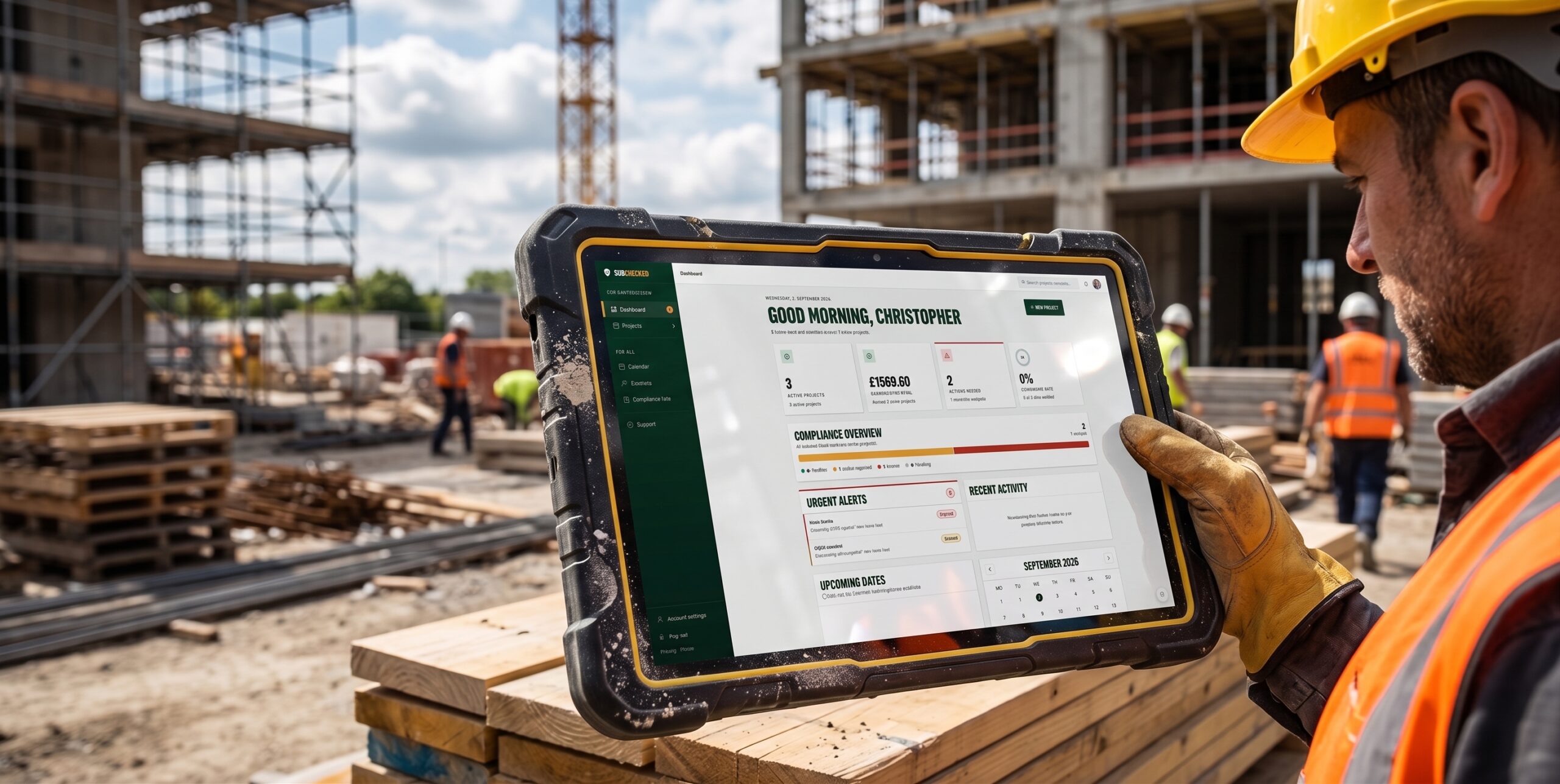
Brief
With AI increasingly delivering reliable results, I decided to set myself a brief to see how far AI could take you on the journey of building a business. The brief was to discover and define a gap in the market for a SaaS business, then build the product to production level and launch it. There were two goals with this: one was to generate some money, and the other was to learn AI on a live project to experience its limitations and setups.
Starting from scratch, this was a longer process than usual, which involved extensive discussion with AI, validation in real life, and individual decision-making.
I created an agent to deliver SaaS ideas based on criteria I set, and required evidence-backed outcomes from Reddit forum posts.
Once I had a business idea, I stress-tested it relentlessly to see if AI could find any holes. I cross-referenced different AIs and fact-checked the evidence it gave.
I checked that AI's claims were legitimate and that the competitors did exist, using web searches and phone calls.
With a business basis, I was able to talk to users to find whether there was a real need for the business, and whether the assumptions the AI had made were valid.
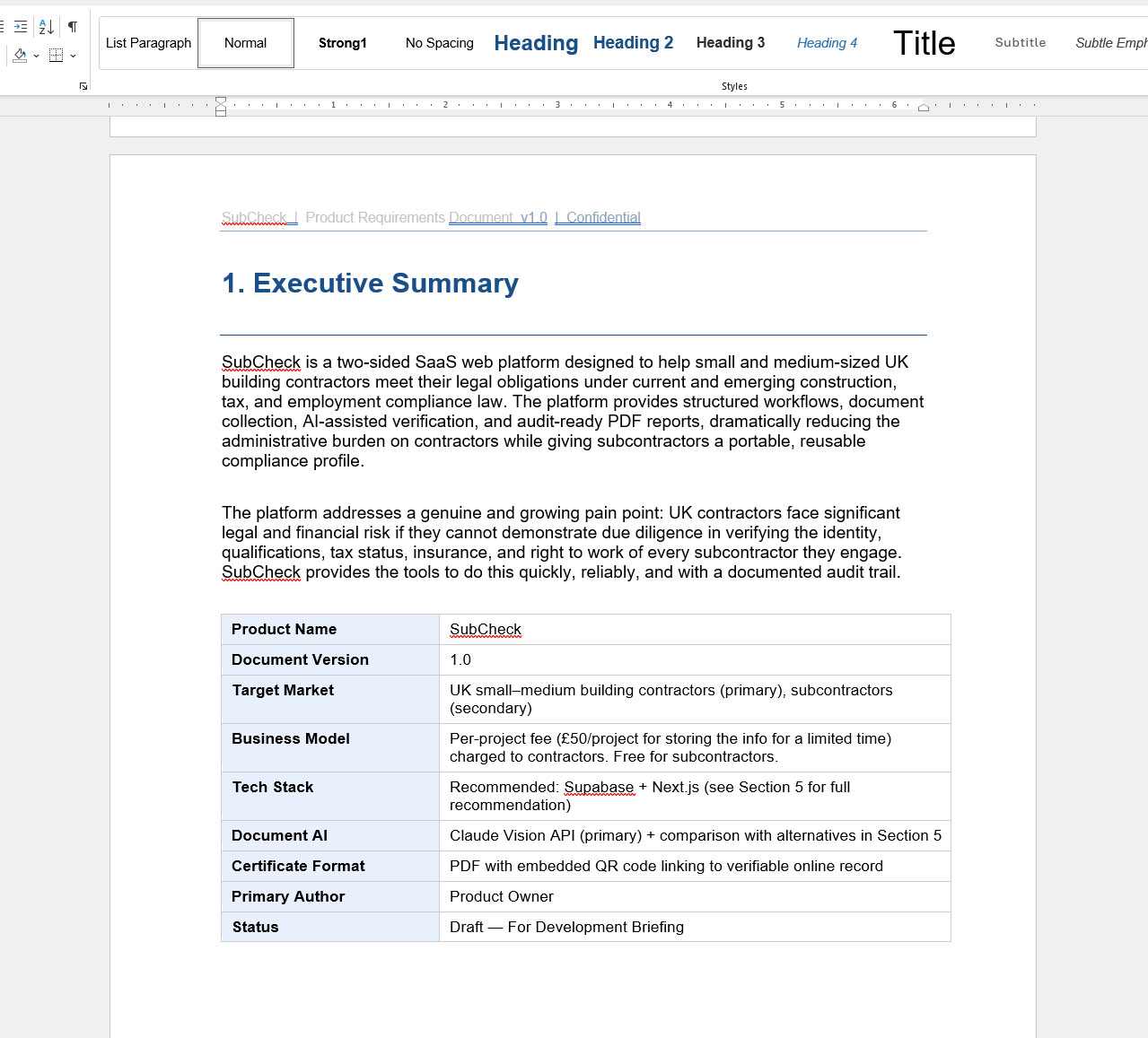
Once the stress test was complete and I was confident that we had something with value, I created a Product Requirement Document to form the basis of the project and outline all the goals, features and details of the project.
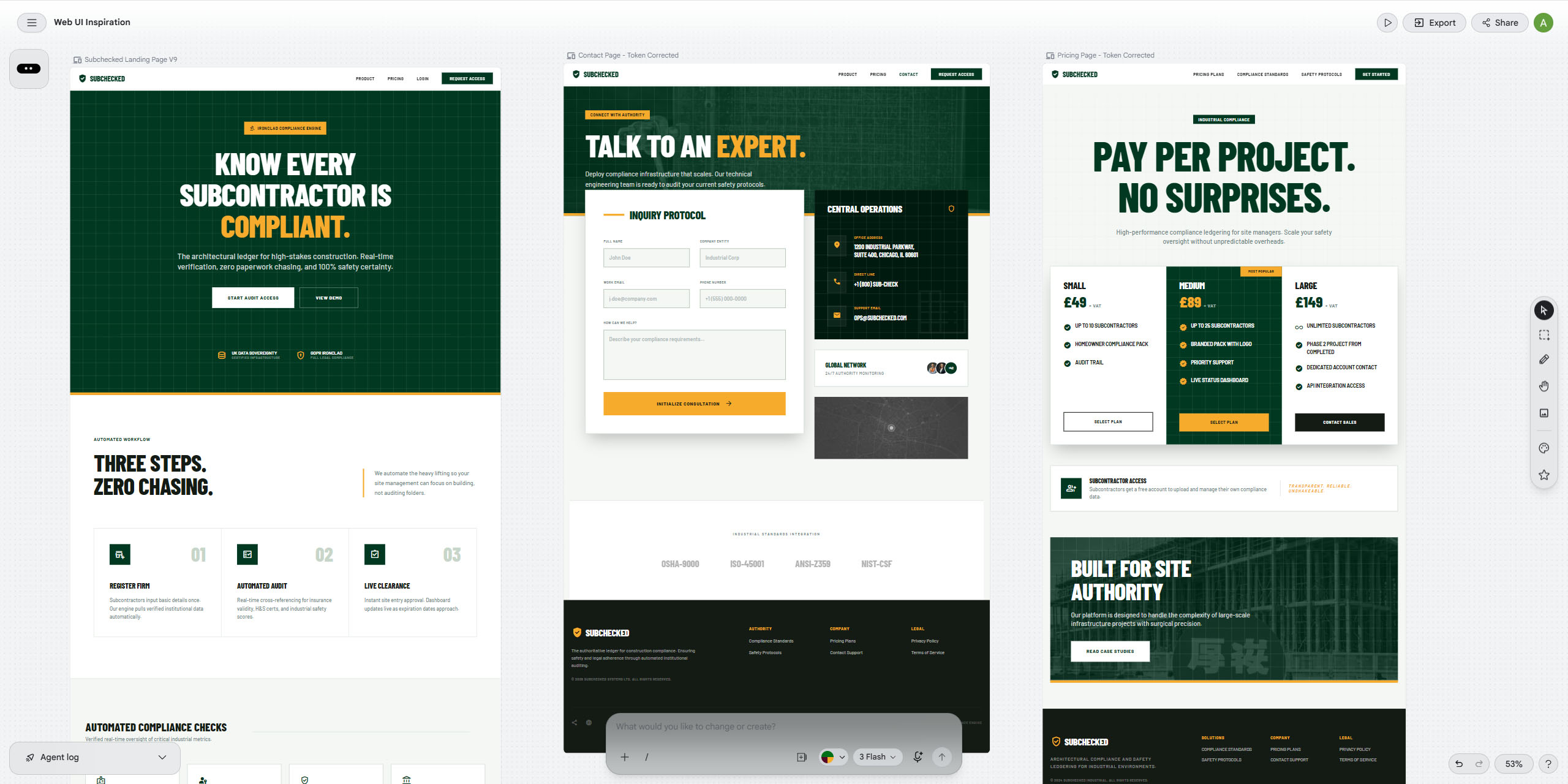
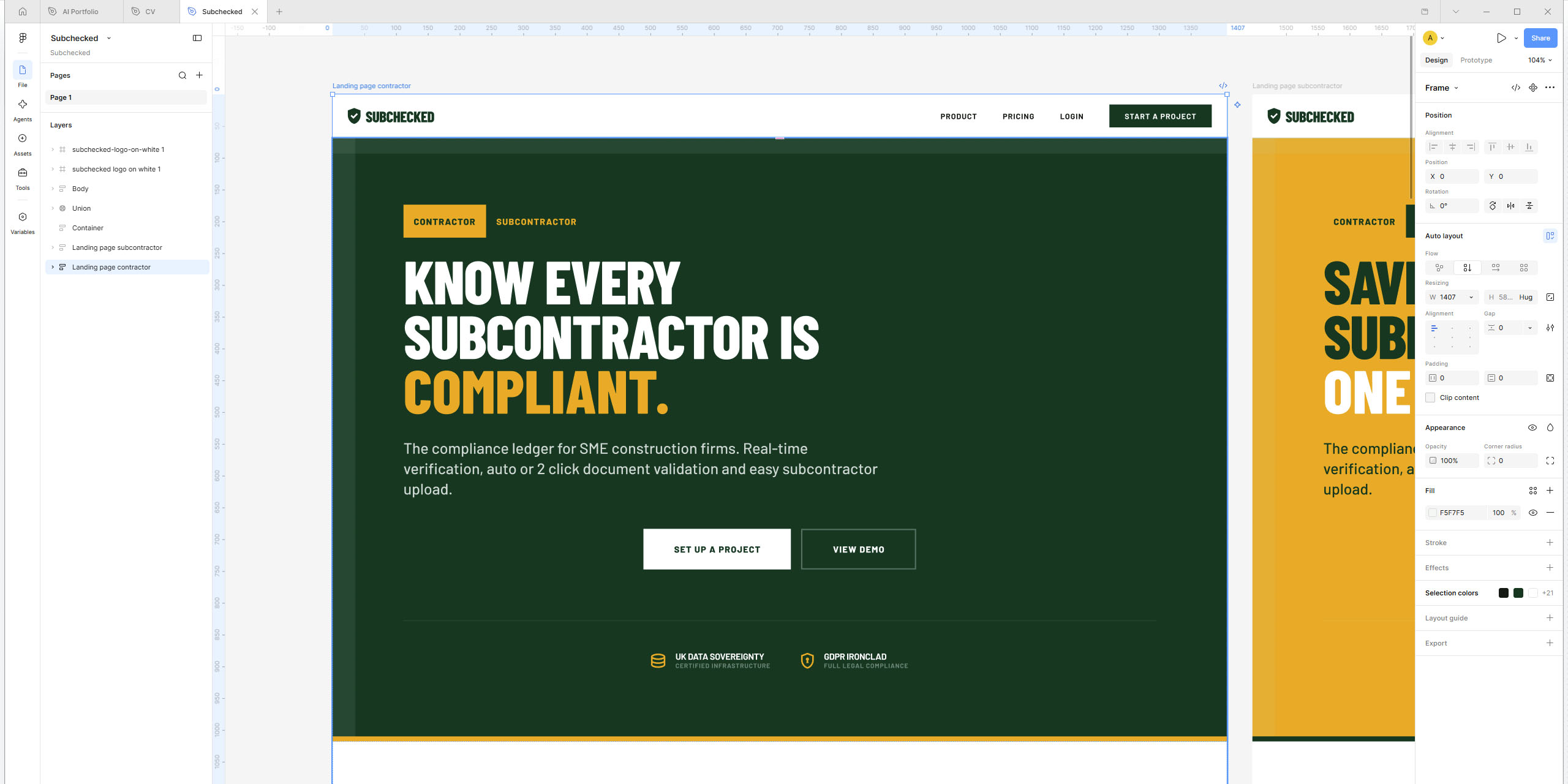
Once we had the PRD, I could hand that to a design AI and get it to create some suggestions for the aesthetic.
Once the concept was established and an aesthetic was defined, I was able to create a prototype. Given the speed at which I was able to get to this point, I streamlined many processes.
Once basic pages were in place, I was able to navigate through the site and establish what features stood out as missing, and how easily the user was able to get through it. AI made this step easy to reach and visualise quickly, so I could flesh out a large working prototype fast.
Having established the 50-page prototype in just two weeks thanks to AI, I had something to test with users and gain feedback on the logic behind the flows.
At the very start of the process, it was important to establish a business concept that had value and was a genuine gap in the market, so that we knew our resources would not be wasted developing a product that would not float. I developed a series of agents to come up with business ideas and stress-test them so that I knew what I had was solid. The recurring theme was compliance, in line with upcoming new legislation, and a market within building compliance that had yet to become saturated.
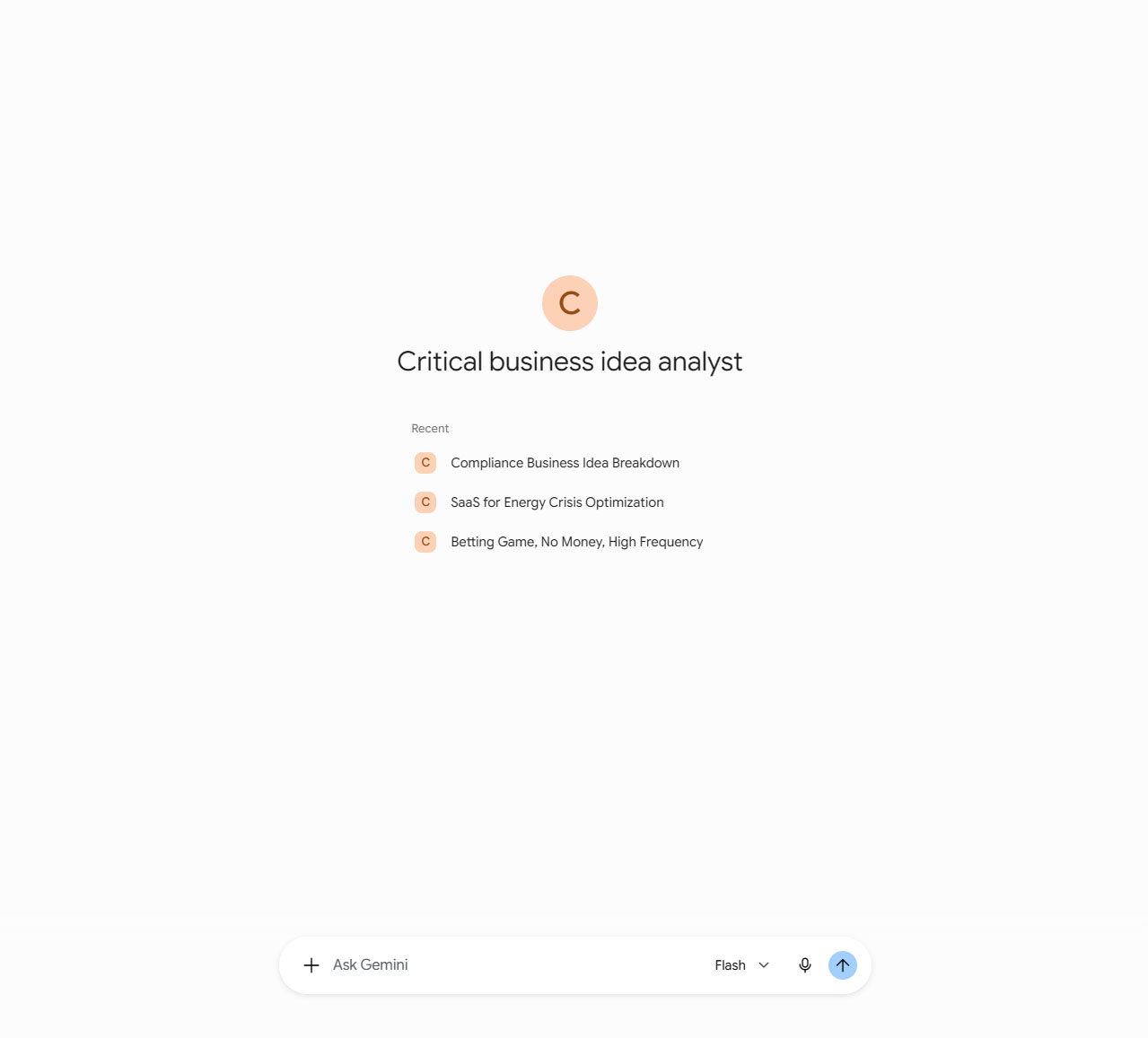
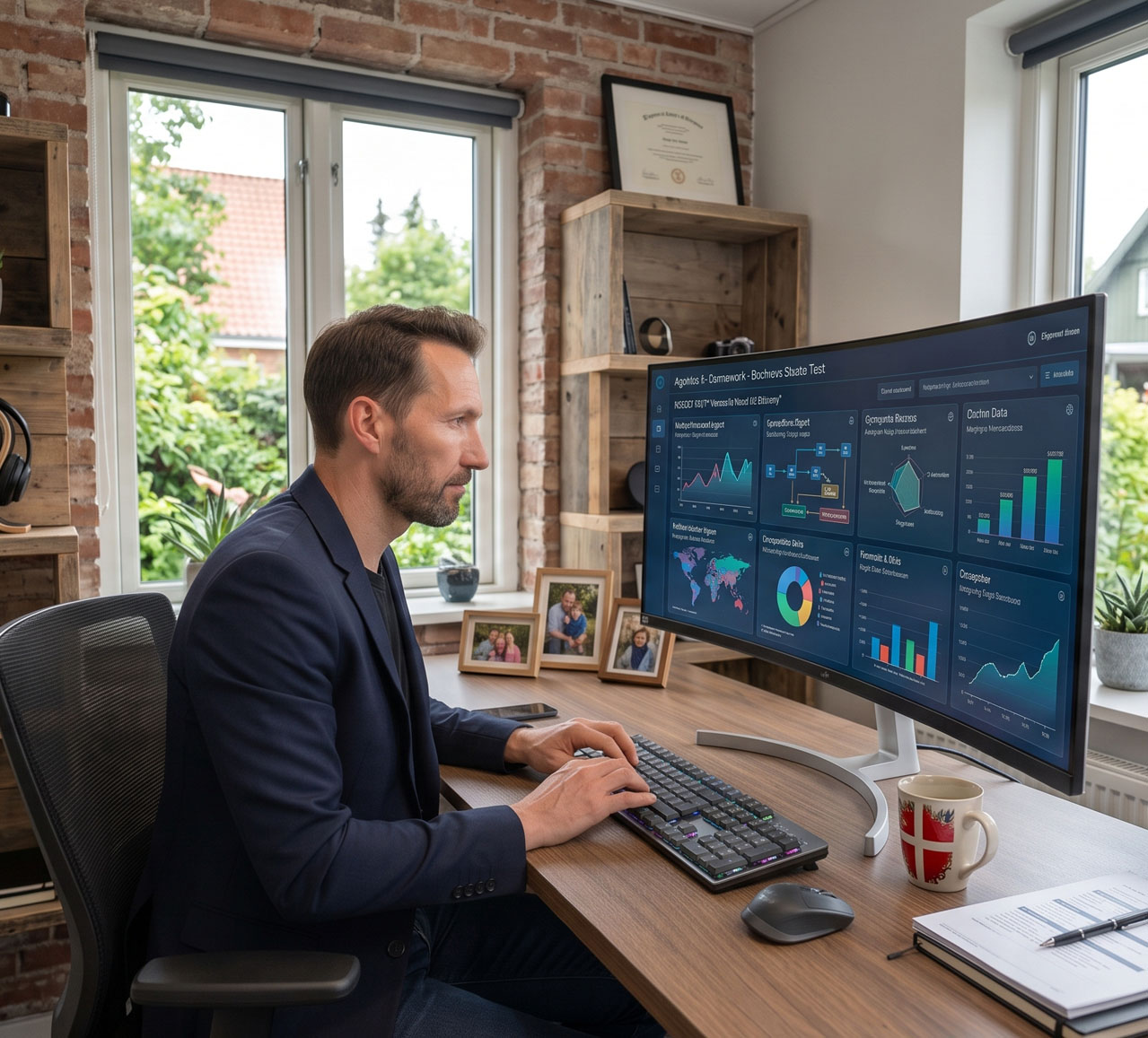
Once I had an idea, I wanted to ensure it had legs and was valid. I grilled the AI to give me links to Reddit threads which quoted the feedback it claimed, asked for links to validate the legal claims it made, made it give competitor details, and asked it to hash out numbers, market size, profitability, feasibility, weaknesses, vulnerabilities and much more. The outcome was self-validating but showed promise that needed validating in the real world.
| Competitor | Pricing model | Cost | Mobile app | UK specific | Compliance |
|---|---|---|---|---|---|
|
Procore
|
Annual | 6-10k min | Yes | No | Yes |
|
Buildertrend
|
Monthly | $349-899 | No | No | No - doc storage only |
|
Fieldwire
|
Monthly per user | $39-89 | Yes | No | No |
|
Archdesk
|
Monthly | £330-690 | Yes | Yes | Some |
|
Plan yard
|
Monthly per user | $50-210 | Yes | Yes | No |
From the research, there were no competitors focusing on compliance as an issue, which could potentially be a way into a larger market. Most were US-based, and whilst some had some compliance ability, they were expensive. Not many offered small to medium businesses a financially viable option to monitor their compliance needs, but the question was: at what level of business is there a compliance need?
"Depends on revenue, but under £3m, between 6-10k annually"
— Procore - Sales rep
I managed to get in touch with a few small builders in the UK, from very small to medium and organised. There was a mixed view on their appreciation of compliance, which raised questions over the market's desire for the product.
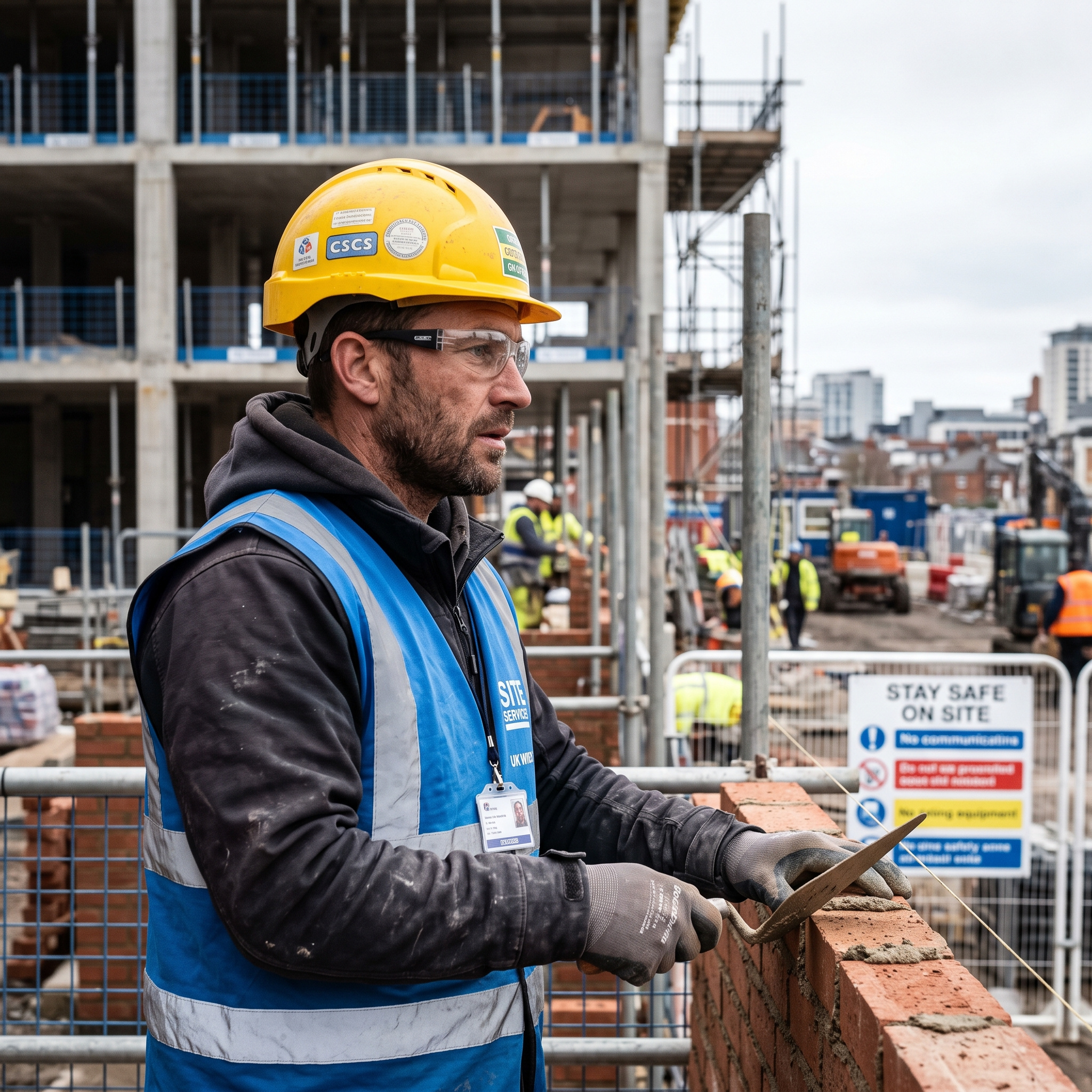
I don't do compliance like that, didn't even know I needed to. The compliance we do is building regs.
Insights
I wasn't aware of any legal obligation for subcontractors — can you tell me more about it?
Insights
There is a lot going on in the area of compliance at the moment so it will be interesting to see where that lands
Insights
There was a consistent theme that the smaller contractors did not know about or show interest in compliance, because it cost them time and money and the trade-off wasn’t worth it. Whilst they had a legal obligation to prove they had met their compliance, the risk of being caught and the chances they were inadequate were slim, so the risk was worth it. This changes further up the ladder, where you have a larger brand with a name to protect. Compliance at this level is necessary to win contracts and maintain a reputation.
This is compliance that SME contractors cannot legally ignore
In total before handover there were around 200 stories for the site, which covered both sides of the usage: contractors and subcontractors. They covered what they mainly came to the site for, but also how the contractor might use the site to organise and monitor the statuses of his/her subbies along the job duration.
The PRD was the first crucial step in communicating to the AI what I was building and how I wanted it built. I deliberately wanted to start building using this route, given the length of time it takes to manually build a site, so fleshing something out using AI directly from the research I had done would give a good gauge on how AI could be introduced to a design process. It also enables much faster visualisation of the product and a faster route to establishing all the pages and journeys needed.
The PRD was a comprehensive document that included everything the AI needed to create a working prototype. The chat transcript from the agent used to stress-test the idea was full of all the info and argumentation needed to explain the business, and from there the PRD agent could pull out target audience, pricing format, user journeys, success criteria, personas, features, and so much more.
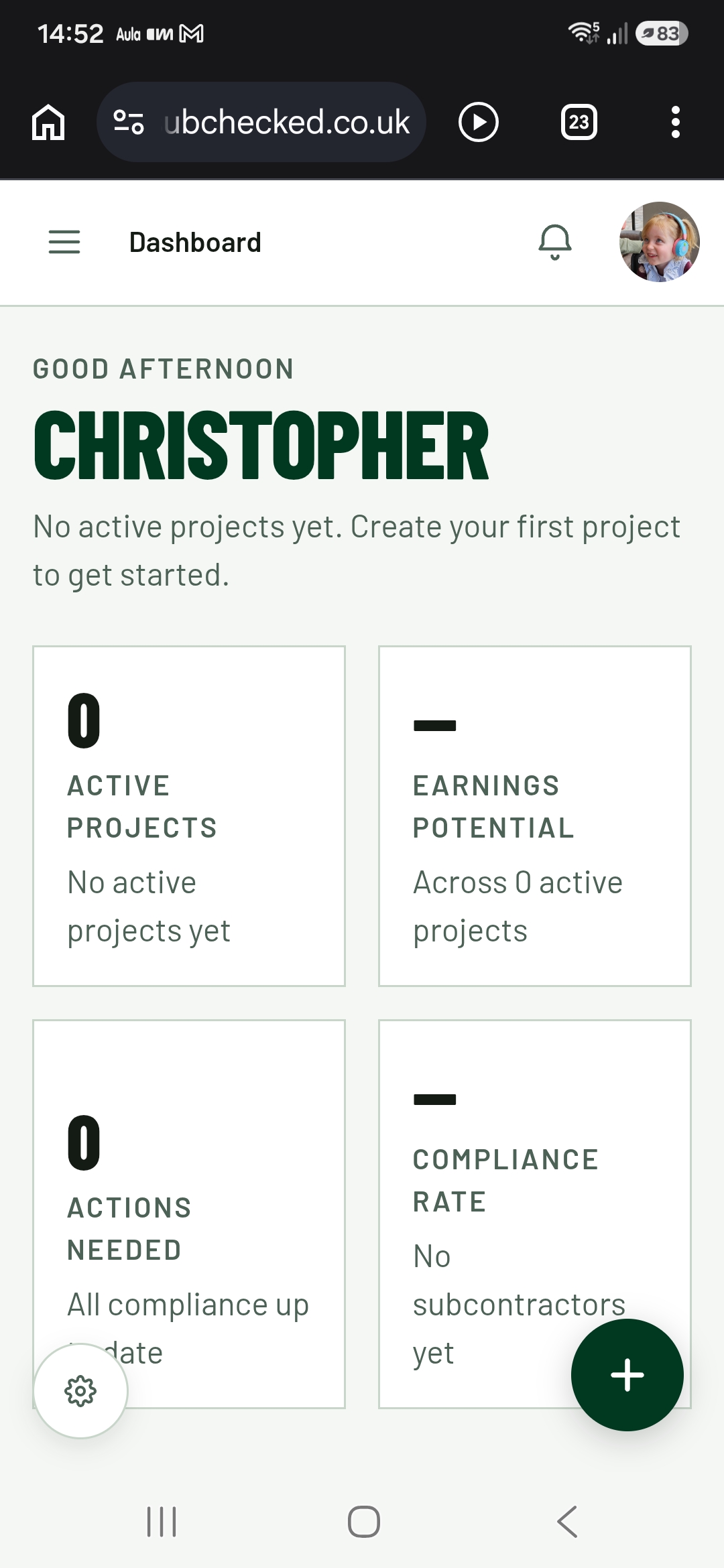
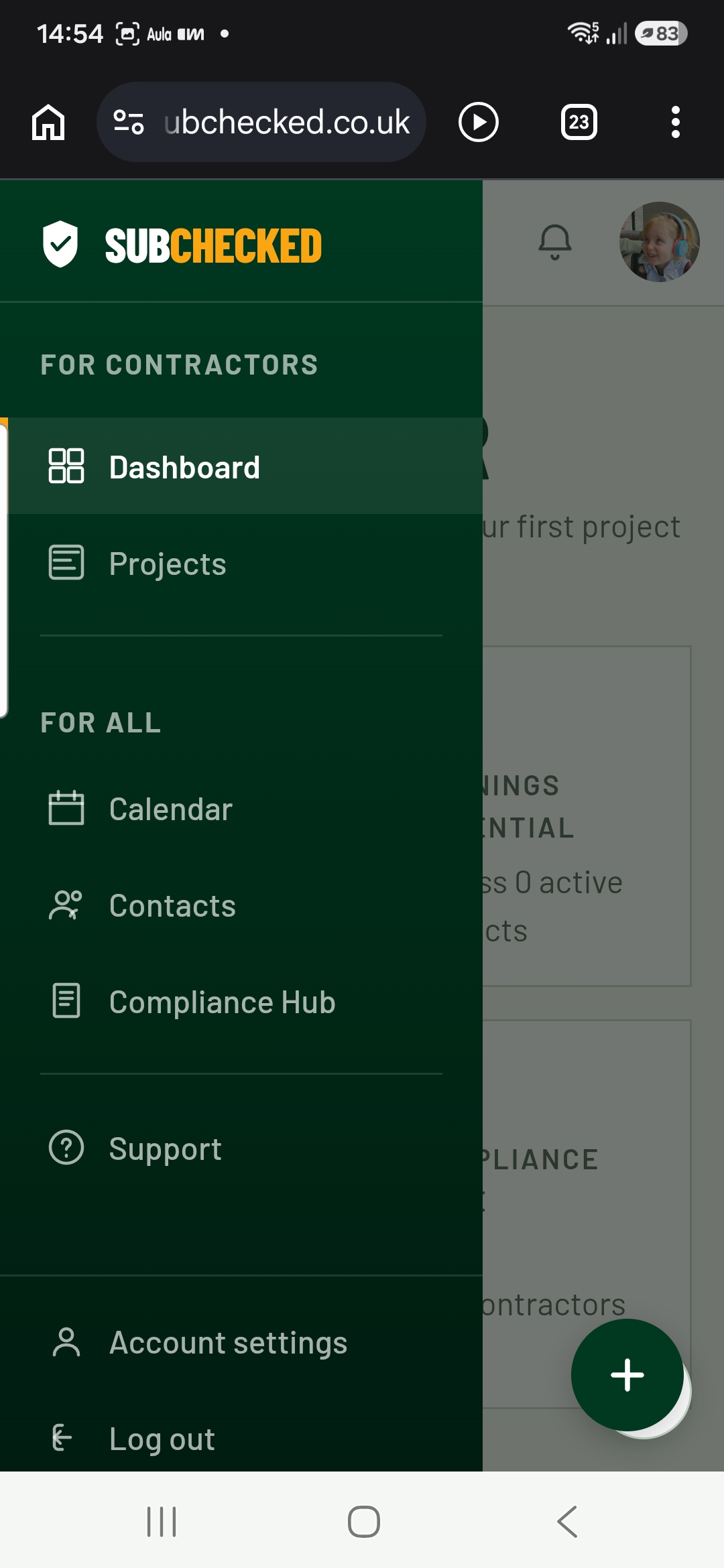
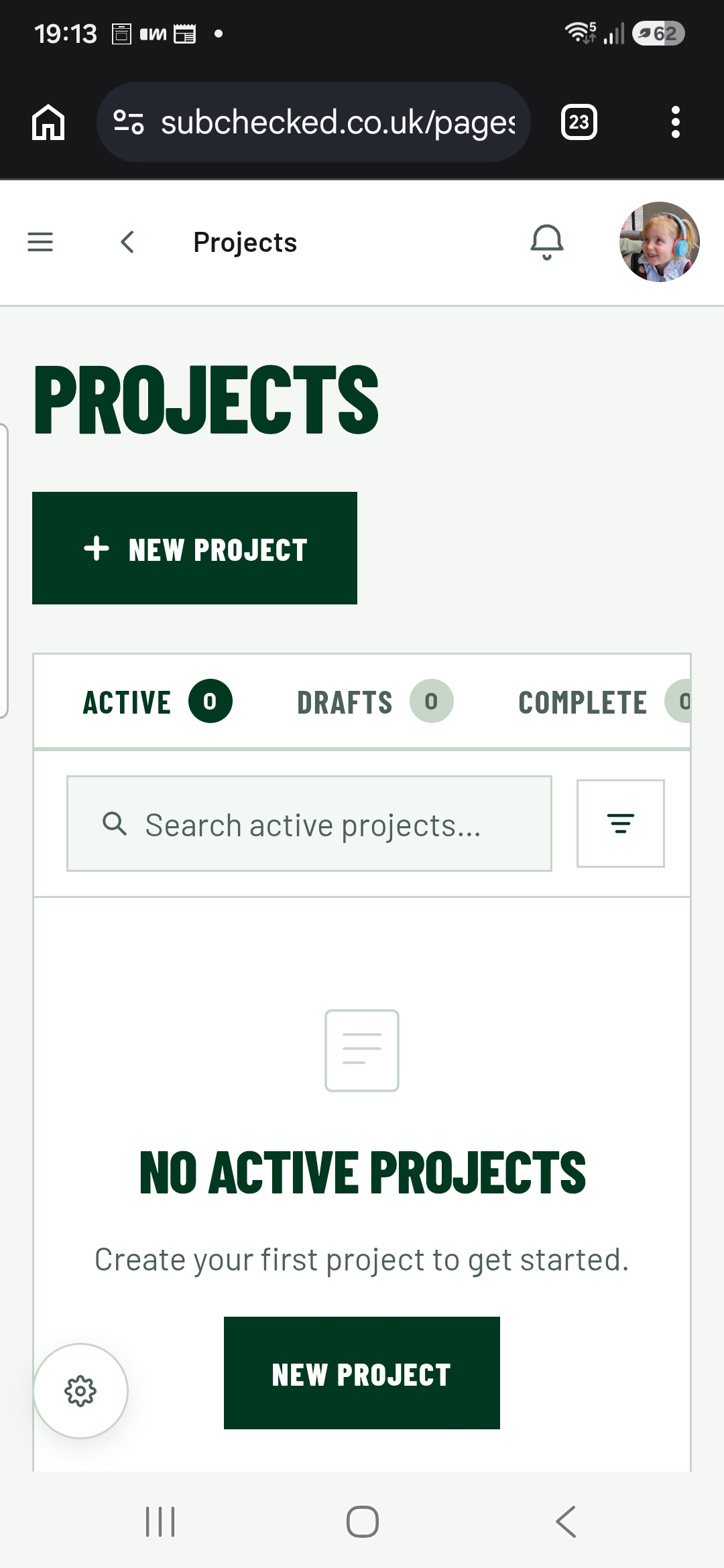
Outcome
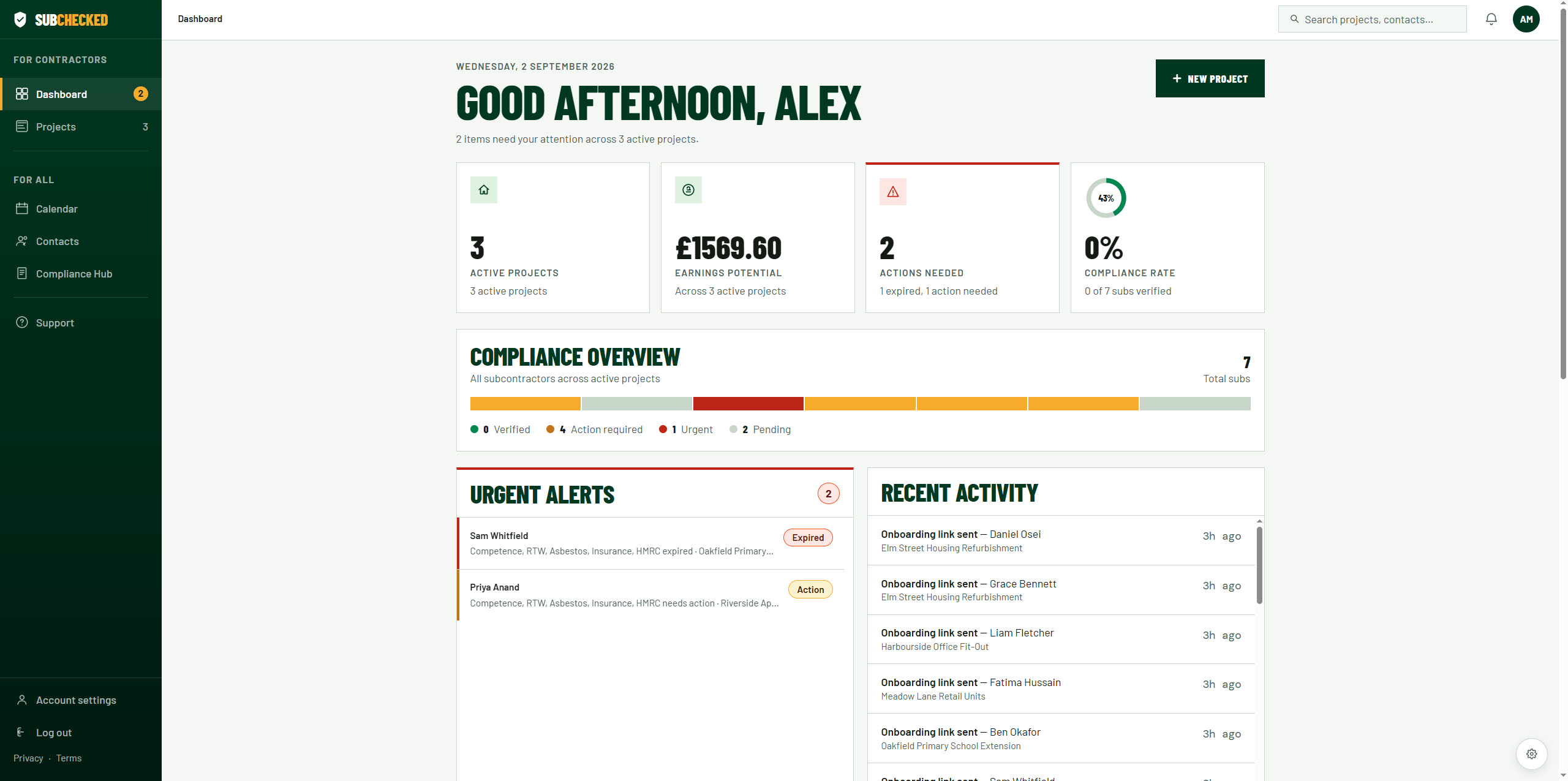
5 out of 5 managed to find a way to the projects page — not all via the same route, but they all got there. I actively added more than one route to make the journey easy.
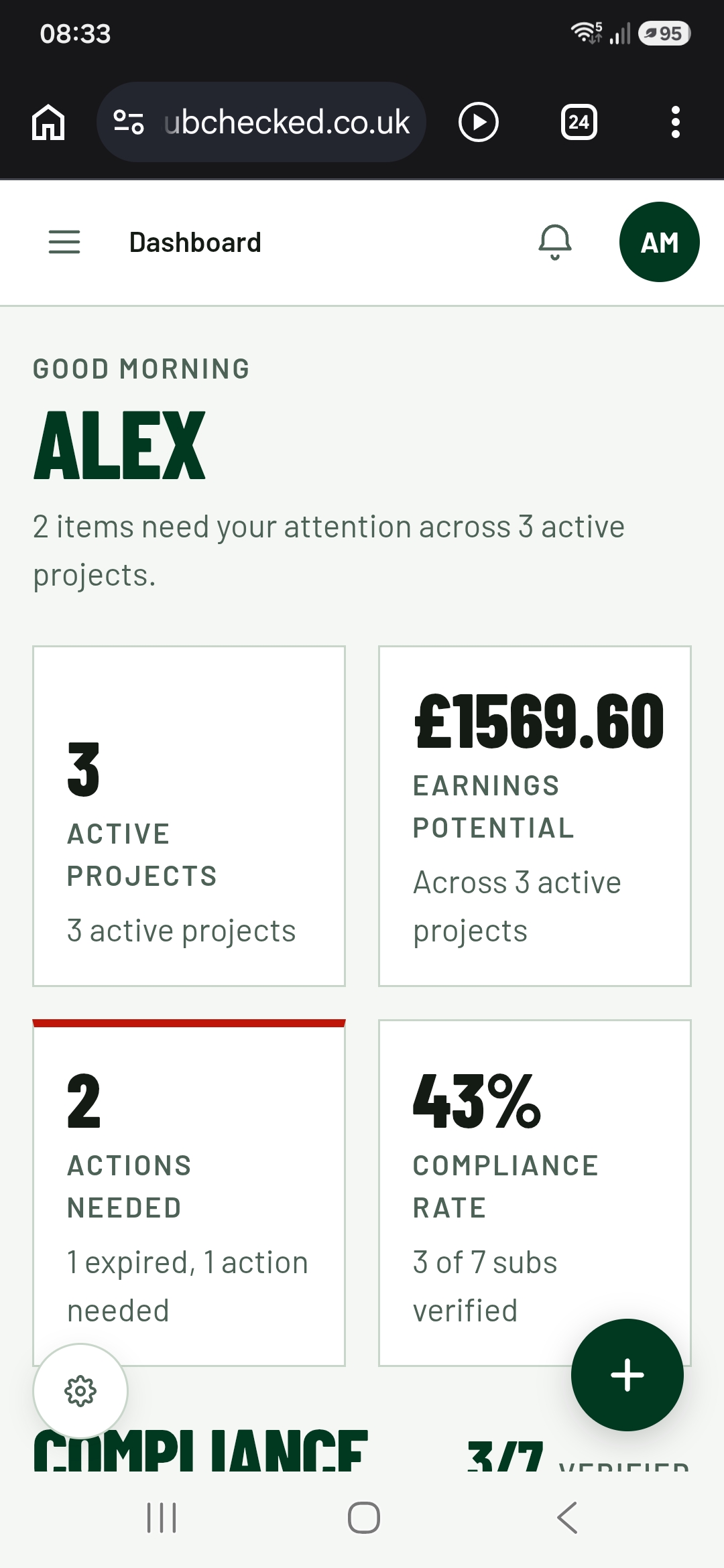
Dashboard
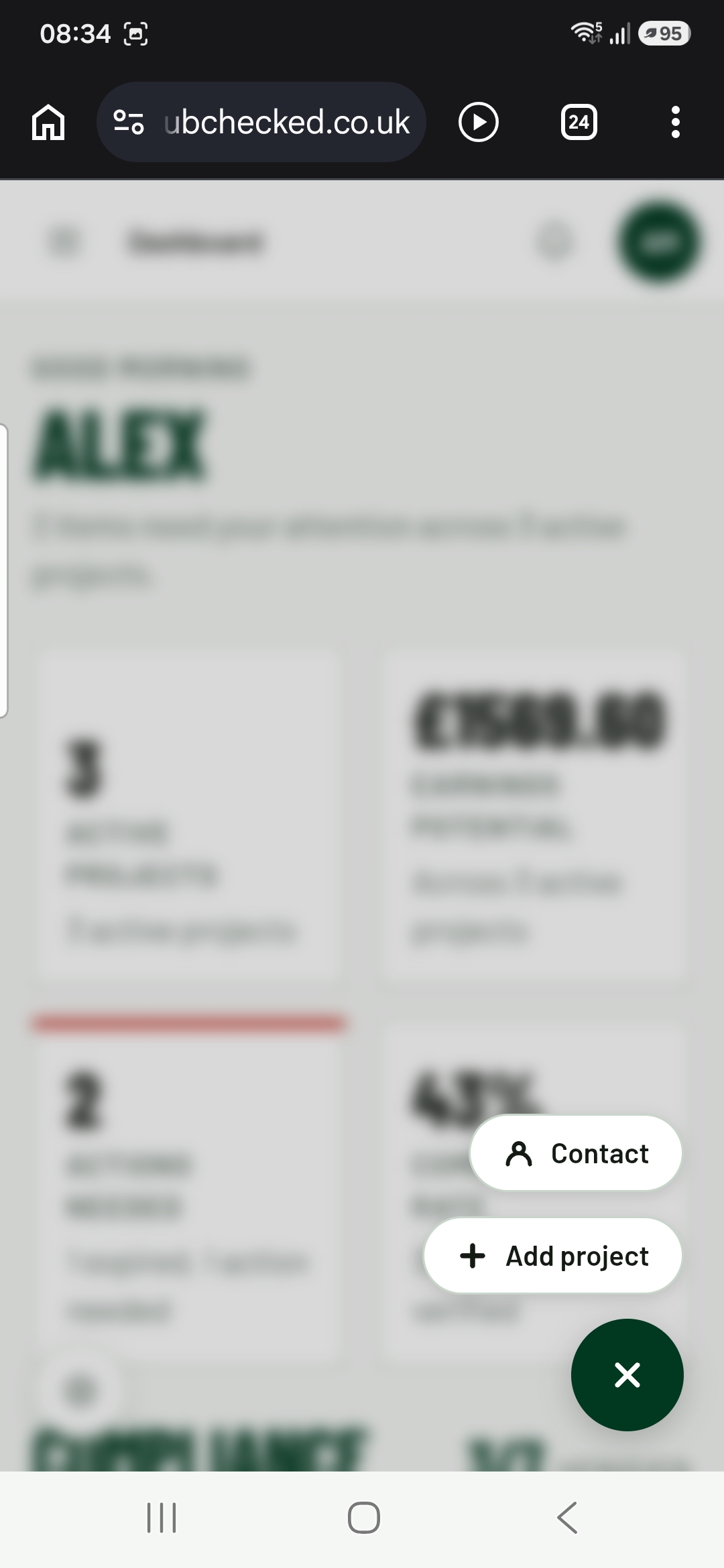
Floating action button
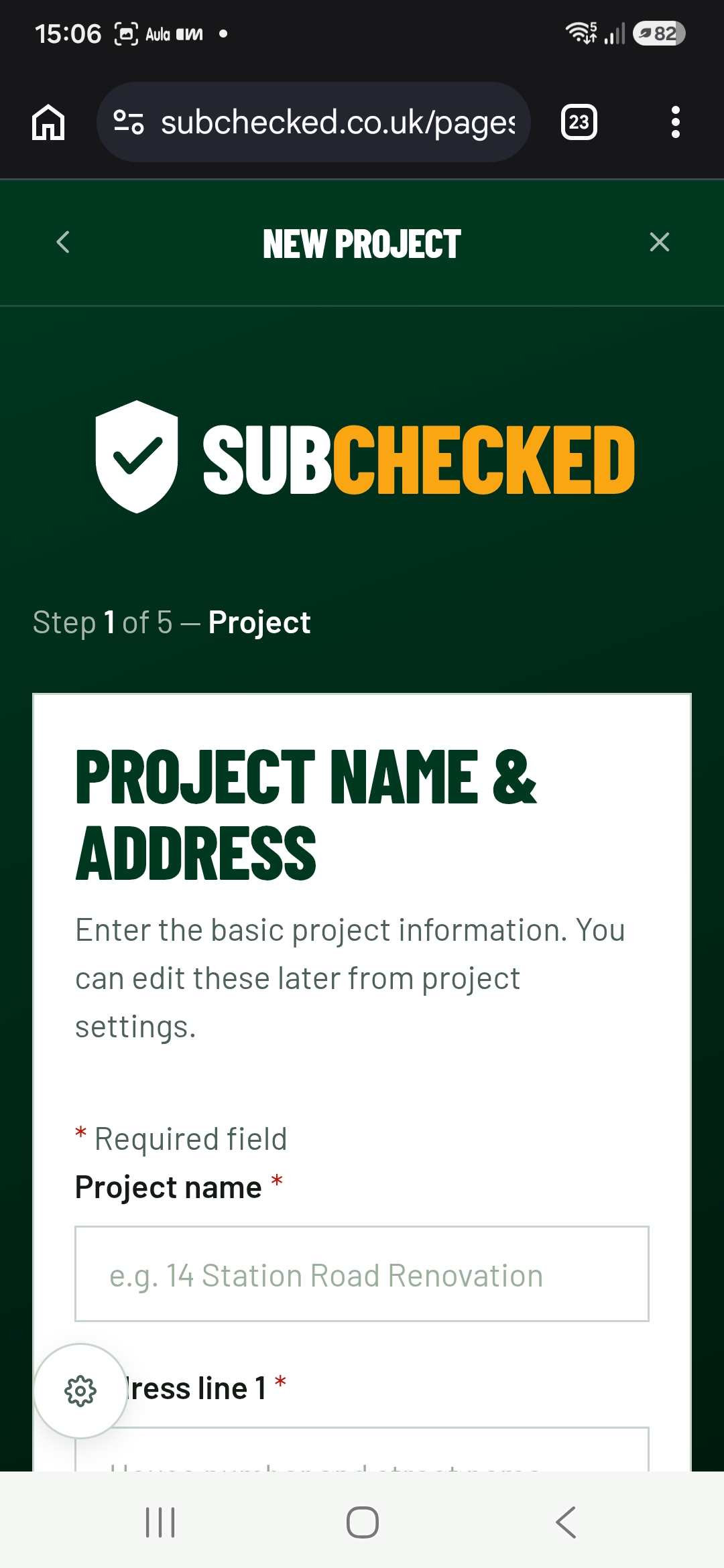
Focused flow starts
Outcome
60% of people could figure the flow out, but some did not see the FAB, so it would be prudent to add other options to the design. Some users navigated to the projects page to see if they could add from there.
This process of using AI to help design and develop the product meant some overlap in the double diamond steps. Whilst I had defined and delivered a working prototype, it was local, and the edits, checks and processes I was due to make would have needed repeating in development, so I merged the deliver phase in order to not create double work. Delivery was therefore not of a design but of the actual product, given that I was designer and developer. The process is documented in the next portfolio piece.
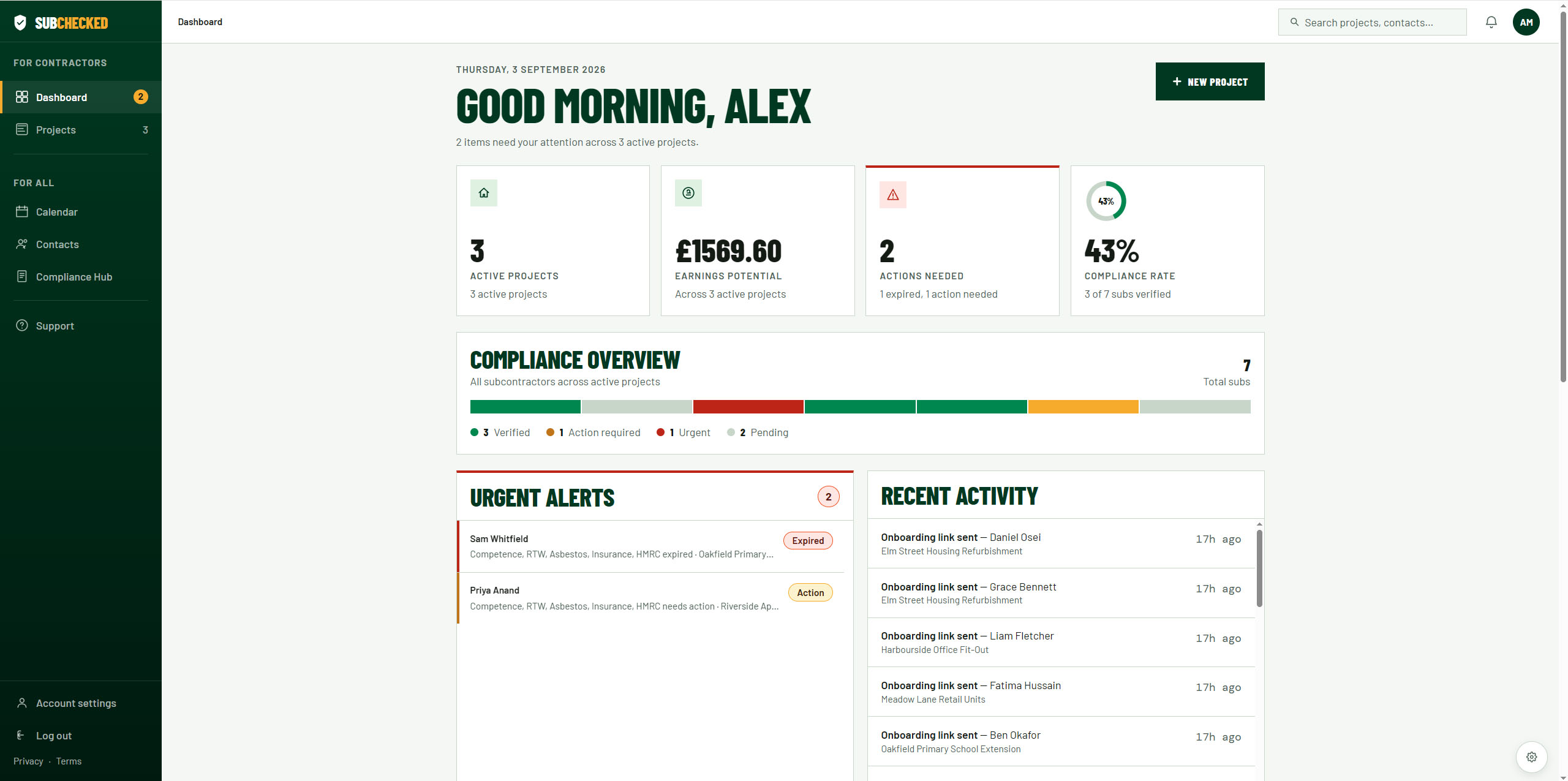
Compliance site
The live demo site shows you the full project. Elements of it have been disconnected from the database in order to allow you to see how the site works.
Visit live demoLige nu tilgængelig for freelancejobs og kreative partnerskaber verden over. Lad os bygge noget exceptionelt sammen.